Comparison
MythScribe vs Obsidian for D&D
Obsidian is a powerful markdown vault for connecting ideas. MythScribe is a purpose-built DM toolkit with stat blocks, CR-balanced encounters, a dungeon map generator, and linked entities — no plugins to install.
Try MythScribe Free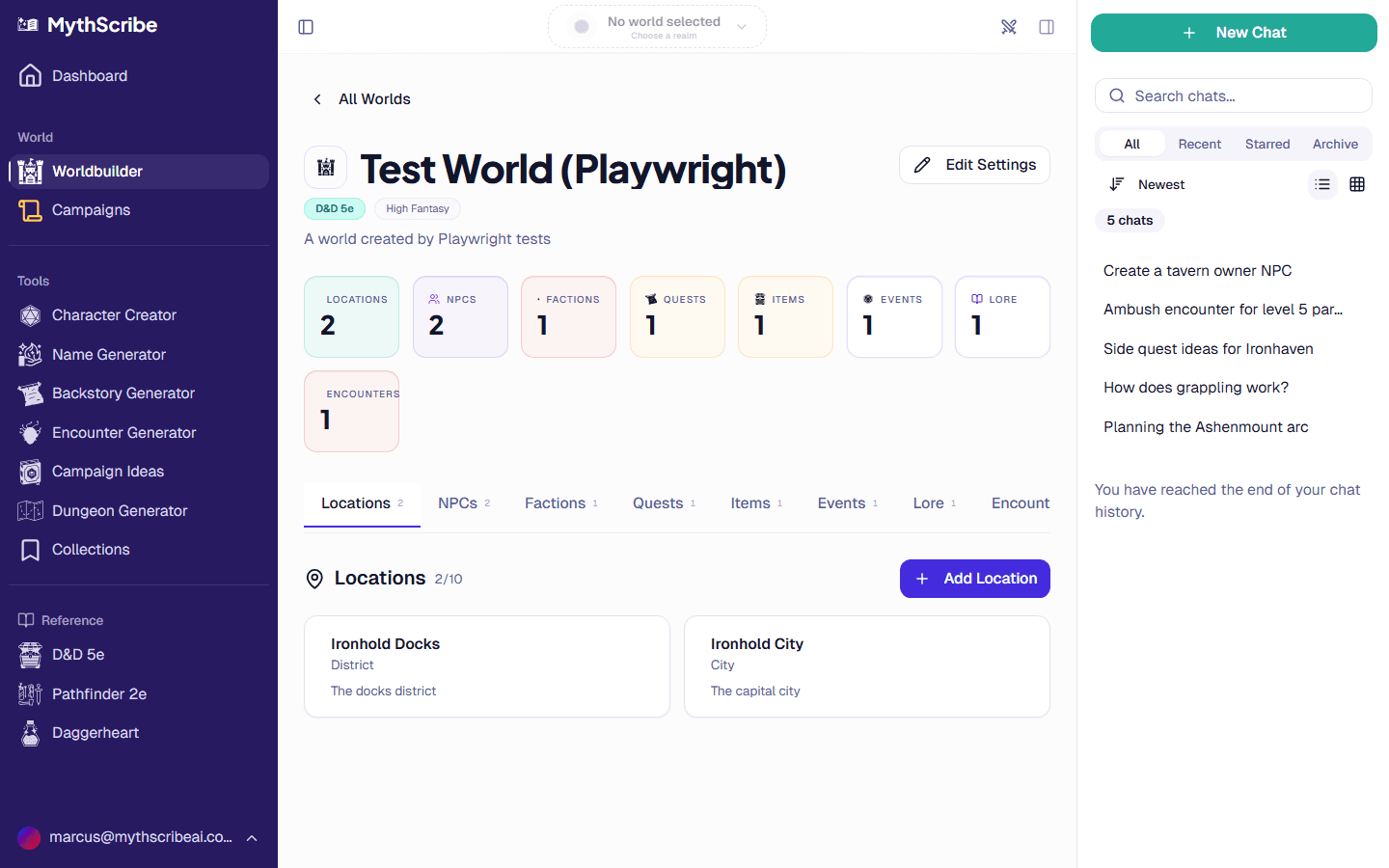
Structured worldbuilder — not a folder of markdown files
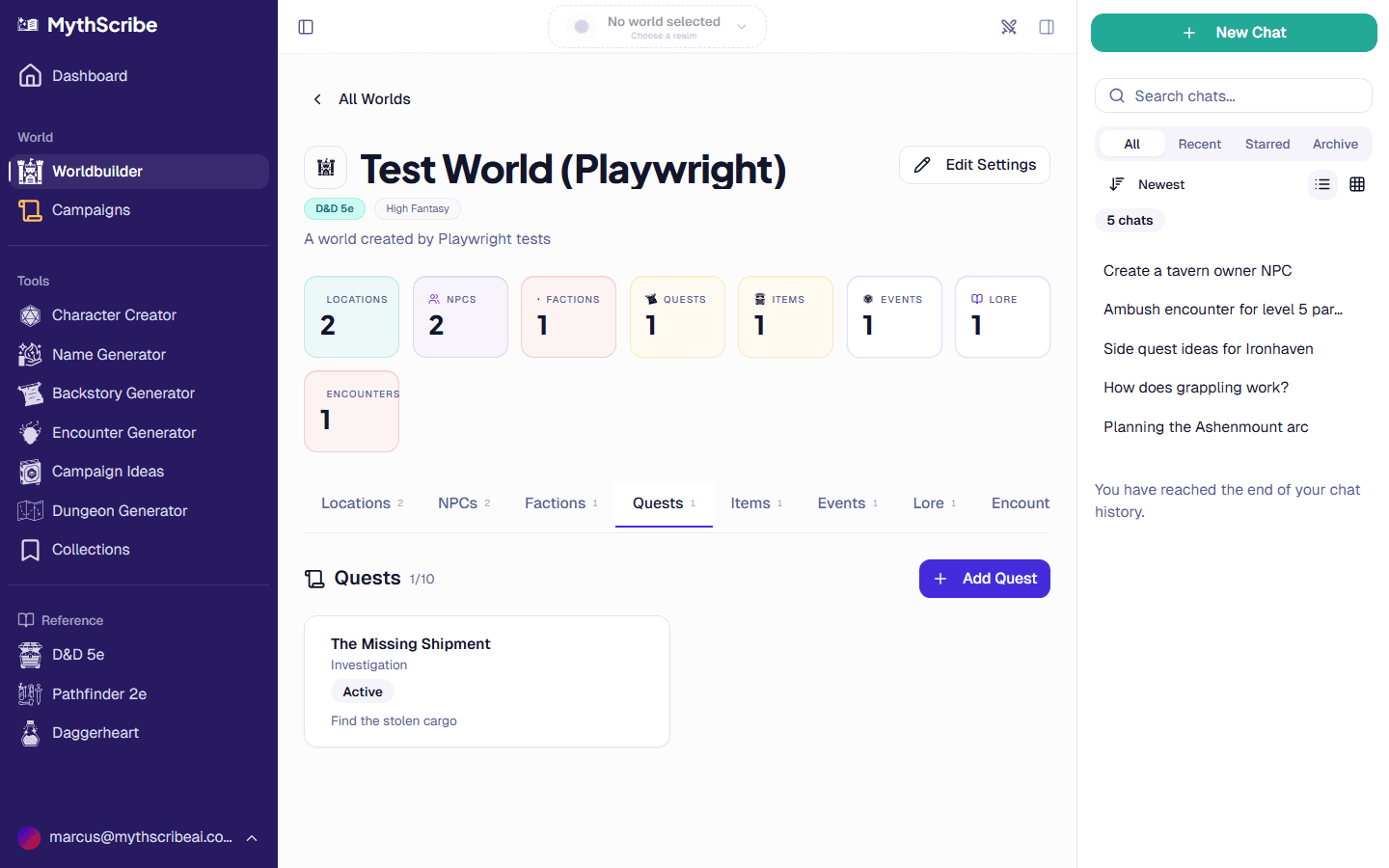
Quests link to NPCs and factions automatically
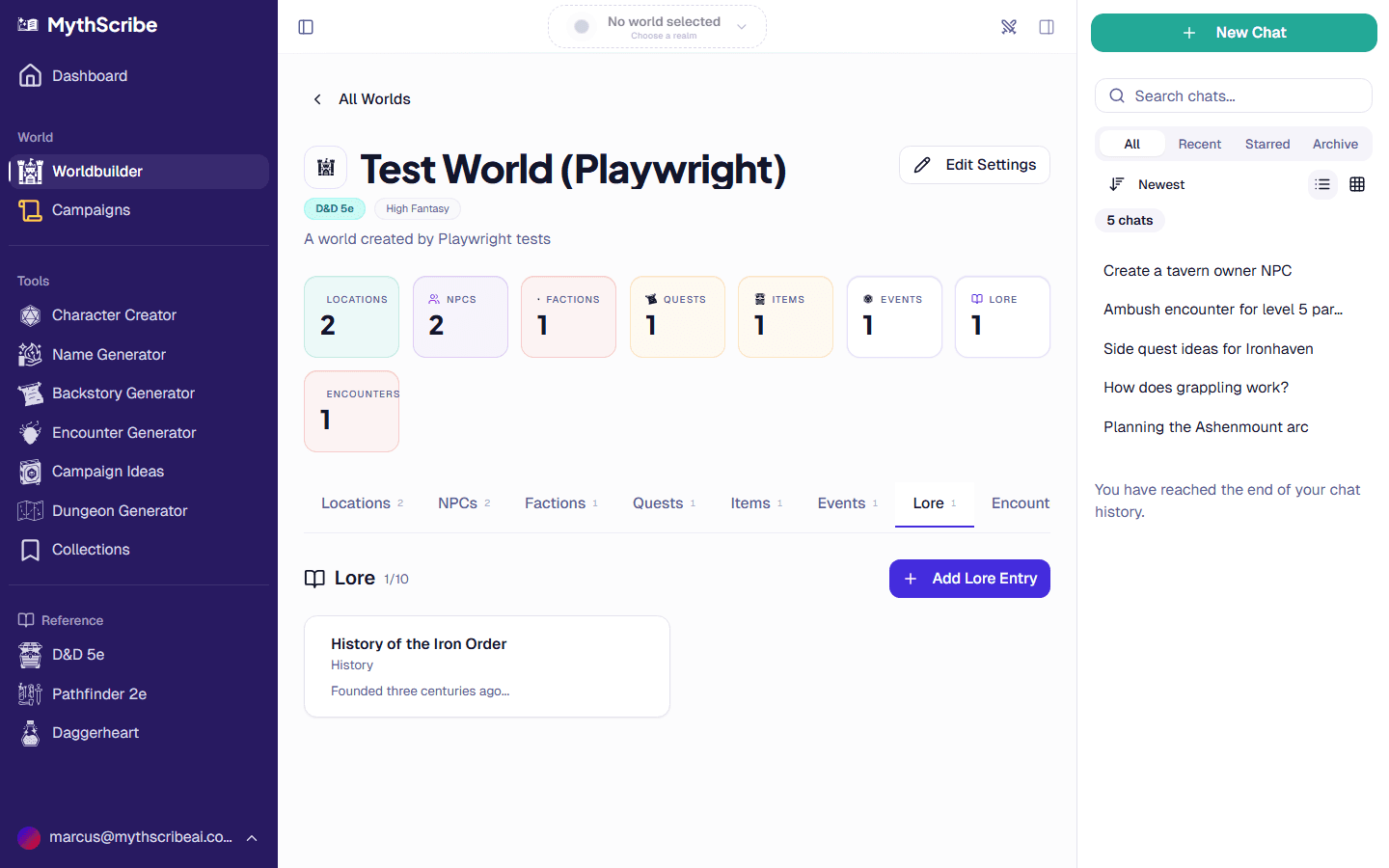
Lore — structured history, not loose notes
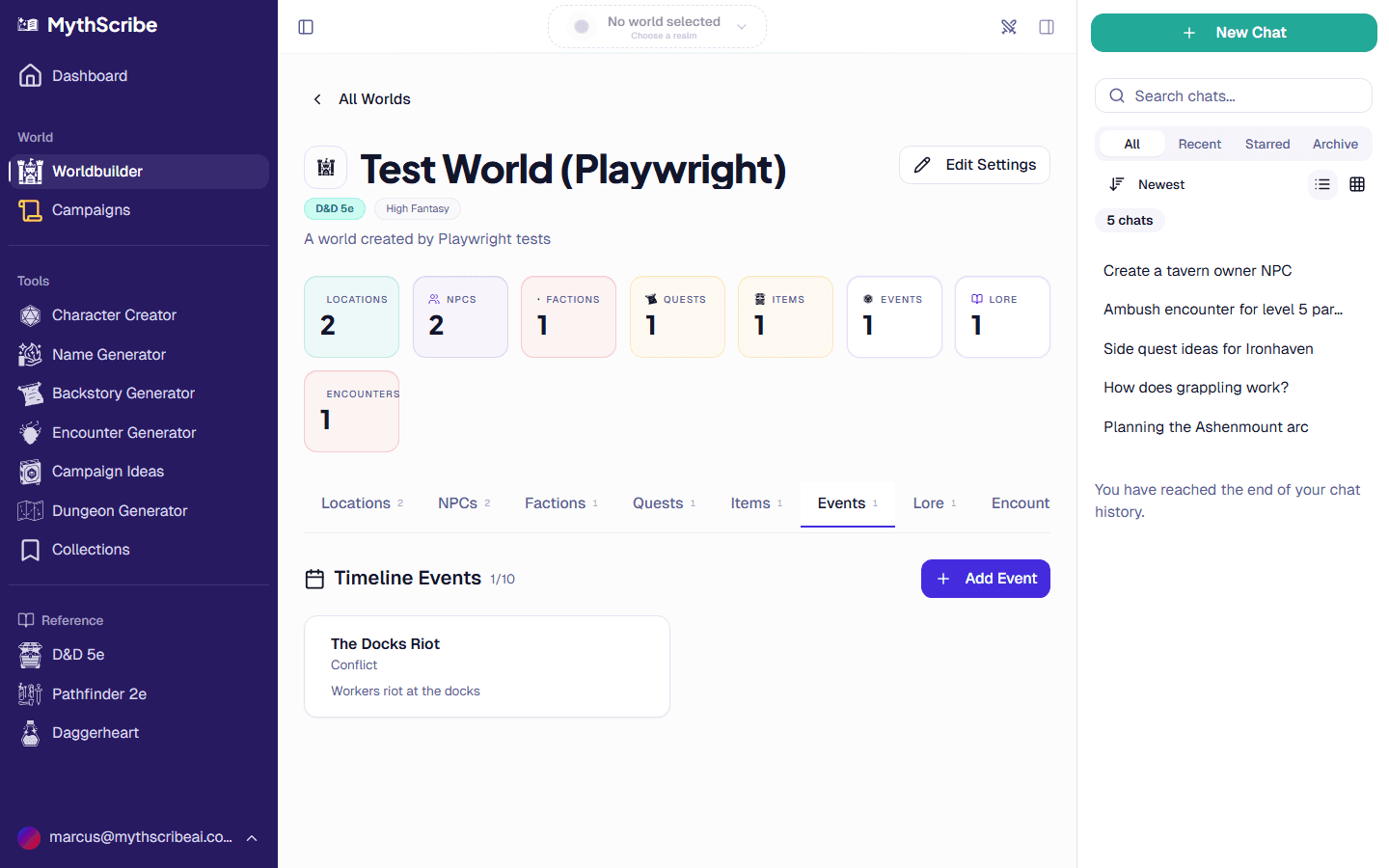
Events — timeline without Obsidian plugins
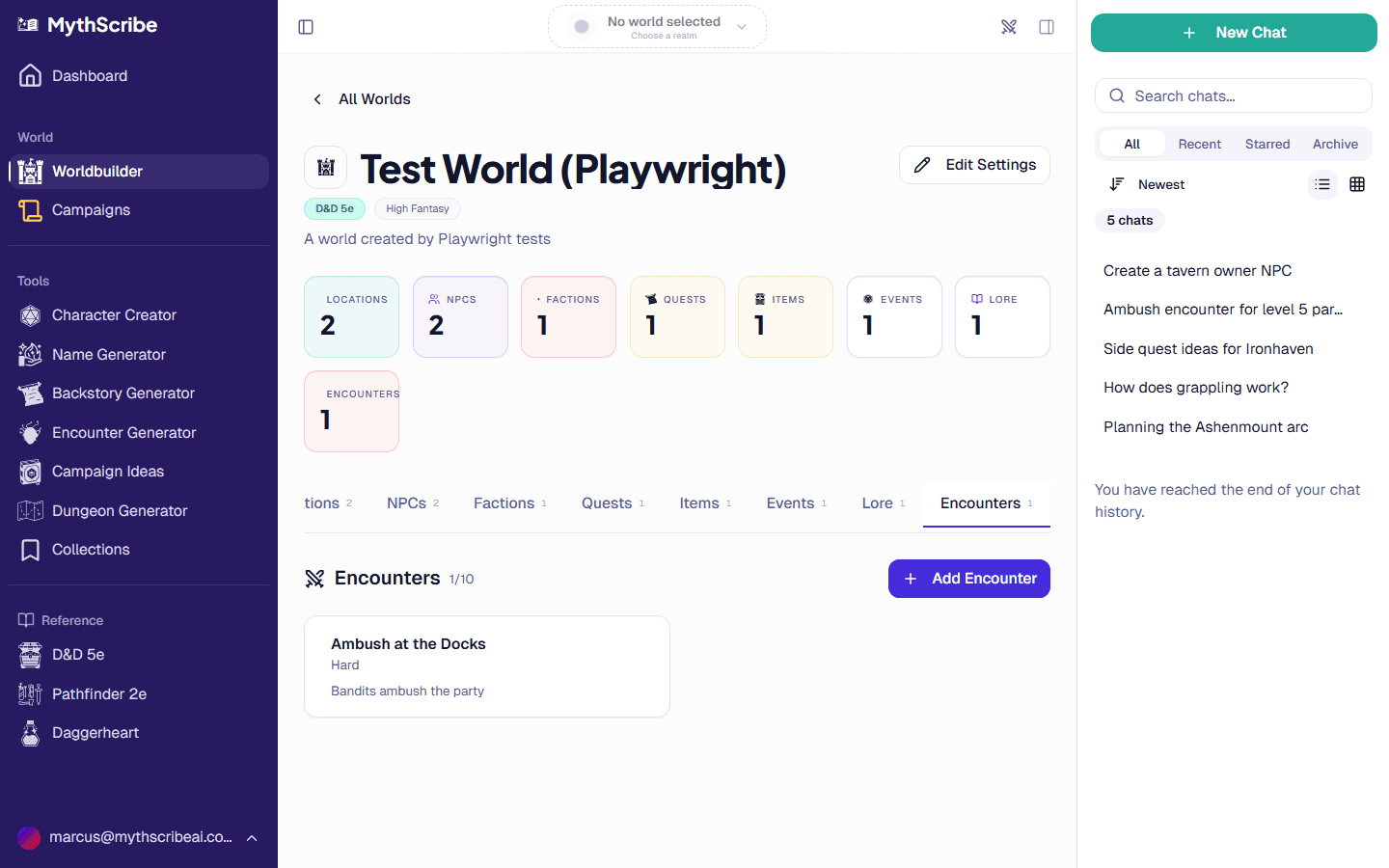
Encounters — CR-balanced, not plain text
Feature-by-Feature Comparison
| Feature | MythScribe | Obsidian |
|---|---|---|
| Built for TTRPGs | Via community plugins | |
| Character creator | Full stat blocks + backstory | Manual markdown |
| Encounter builder | CR-balanced for party level | |
| Dungeon map generator | Procedural rooms + corridors | Plugins (Leaflet) for static maps |
| NPC sheets | Typed fields: stats, personality, secrets, inventory | Markdown frontmatter you define |
| Campaign idea generator | Three-act premises with hooks | |
| Name generator | Lore-appropriate, multi-system | |
| Worldbuilder | Eight typed entity types with linked dropdowns | Free-form markdown + plugins |
| SRD reference | Built-in, searchable | Manual import / plugins |
| Entity relationships | Auto-pulled dropdowns (quest → NPC → faction) | [[Wiki links]] (manual) |
| Stat block rendering | Native ability scores, skills, HP, AC | Fantasy Statblocks plugin |
| Multi-system support | D&D 5e, Pathfinder 2e, Daggerheart | Whichever plugins you find |
| Graph view | Best-in-class | |
| Offline access | ||
| Local-first / privacy | Cloud-based (encrypted) | Local files by default |
| Free tier | 7-day free trial | Free for personal use |
| Pricing starts at | $5/mo | Free (Sync: $5/mo) |
Why DMs Choose MythScribe Over Obsidian
Zero Plugin Configuration
Running D&D in Obsidian means installing and configuring a stack of community plugins: Fantasy Statblocks, Initiative Tracker, Dice Roller, Leaflet for maps, Dataview for queries, Templater for NPC templates. MythScribe has all of this built in — character creation, encounter building, stat blocks, dungeon maps, and worldbuilding. No plugin hunting, no YAML debugging, no breaking when a plugin updates.
Structured Data, Not Just Markdown
In Obsidian, an NPC is a markdown file with frontmatter you define yourself. In MythScribe, an NPC is a structured entity with typed fields — ability scores as editable numbers, skills with auto-calculated modifiers, inventory as a tag list, faction links as dropdown selects that pull from your real worldbuilder. Quests reference real NPCs by name. Encounters carry their own CR and party level. The data isn't a convention — it's enforced.
AI Assist When You Need It
Obsidian is excellent at linking notes you've written. MythScribe ships with a TTRPG-aware chat assistant that has your world's NPCs, factions, and locations as context — useful when you need a smuggler in Ironhaven who fits your existing campaign and don't want to write one from scratch. Generated content saves directly into the structured worldbuilder. This is the only place AI lives in the app; the rest is direct controls you operate yourself.
When Obsidian Might Be Better
If you want local-first storage, full control over your data as plain files, or you already have a polished Obsidian vault with plugins configured, it's a great tool. Obsidian's graph view is also excellent for visualizing connections. MythScribe is best for DMs who'd rather use the tools than maintain the stack.
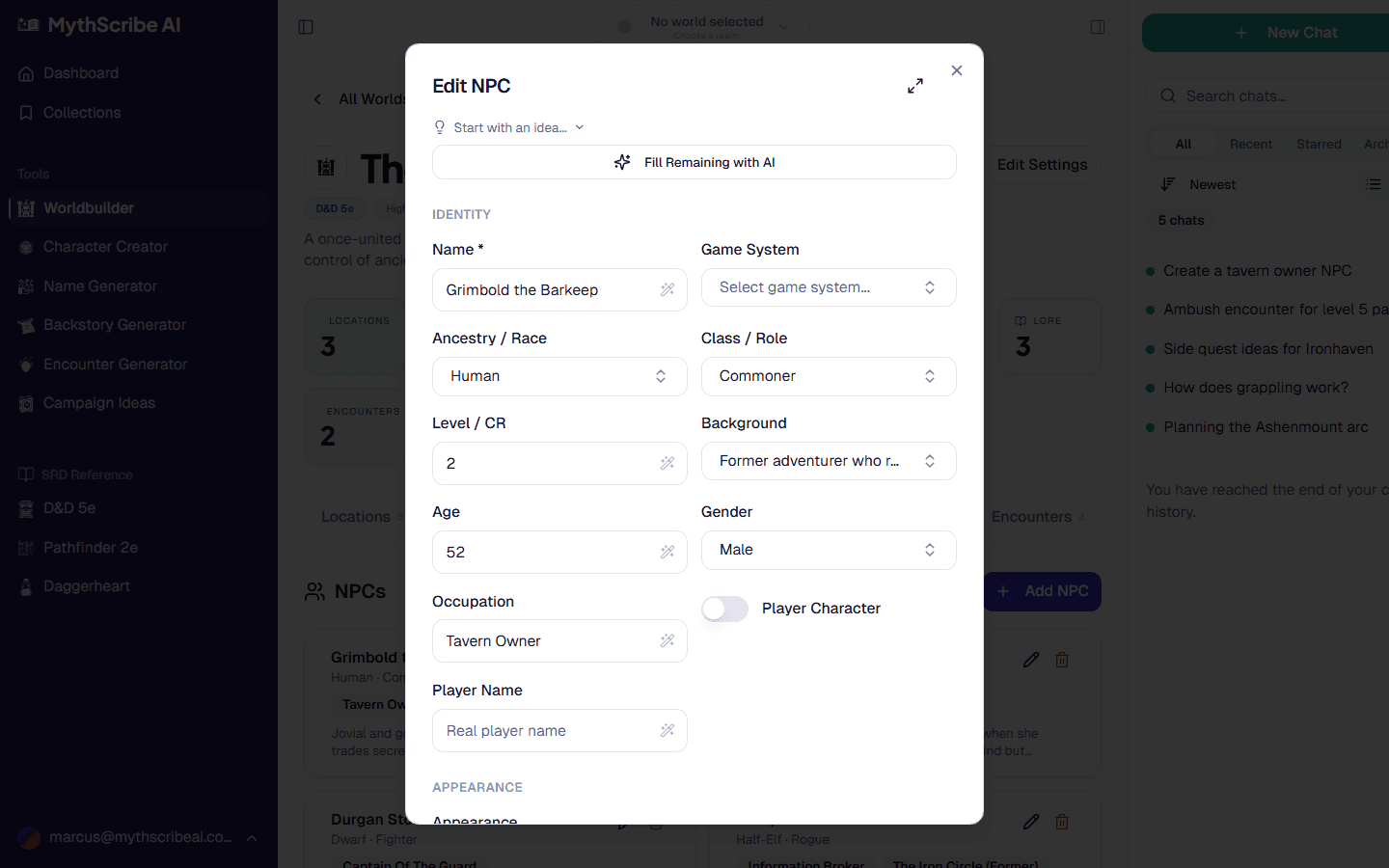
Structured NPC data — not markdown frontmatter
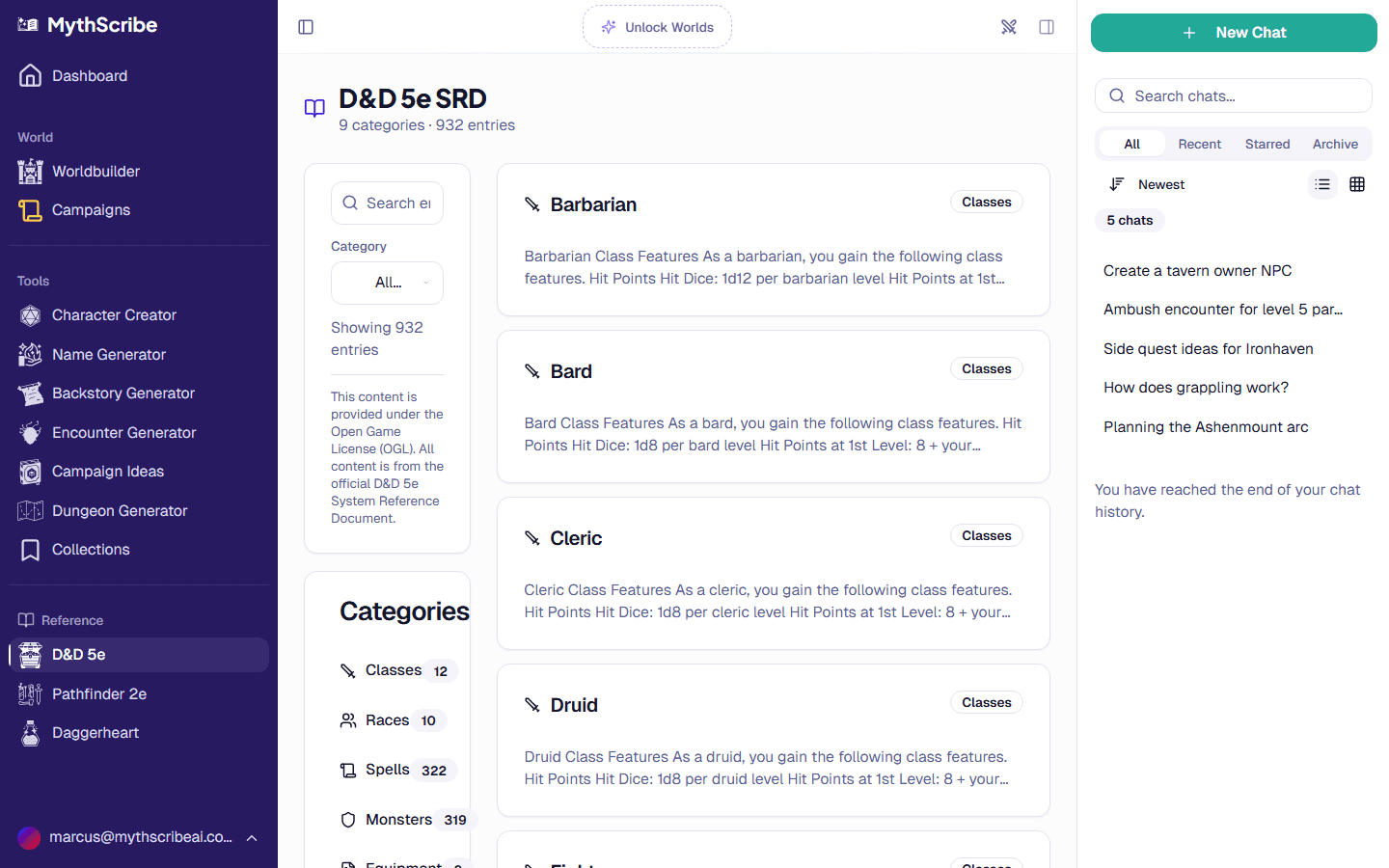
Built-in SRD — no importing markdown files
Which Tool Is Right for You?
Choose MythScribe if you...
- Don't want to install and configure TTRPG plugins
- Need stat blocks and encounter balance without manual math
- Want a procedural dungeon map generator alongside the wiki
- Prefer typed entities and dropdowns over markdown frontmatter
- Play D&D 5e, Pathfinder 2e, or Daggerheart
Choose Obsidian if you...
- Want local-first, privacy-focused storage
- Enjoy building custom systems with plugins and templates
- Need a graph view to visualize connections
- Already have a working Obsidian TTRPG vault
- Want to own your data as plain markdown files
Frequently Asked Questions
Can I use MythScribe alongside Obsidian?
Absolutely. Many DMs use MythScribe for prep — generating NPCs, building encounters, drafting dungeons — then copy key details into their Obsidian vault for long-term reference and graph visualization.
Does MythScribe work offline?
MythScribe is cloud-based and requires an internet connection. If offline access is critical, Obsidian is the better choice.
What about the Obsidian TTRPG plugin ecosystem?
Obsidian has excellent community plugins like Fantasy Statblocks, Initiative Tracker, and Leaflet. These require configuration and maintenance. MythScribe bundles equivalent functionality out of the box — no plugin updates, no breaking changes, no YAML debugging.
Generate Your World. Don't Just Document It.
7-day free trial. No plugins to install.